

A 173 year-old newspaper built one of the stickiest by digital products. Here is what product and marketing teams can steal from their playbook
TL;DR
NYTimes Games has turned puzzles into a daily ritual for millions through habit-forming design. This article breaks down the psychology behind their 8 billion annual plays and what CRO teams, product managers, and marketers can learn:
Key Takeaways:
- The Hook Model in action: NYTimes Games masters behavioral psychology to create automatic daily habits
- Frictionless simplicity makes onboarding instant (no tutorials needed)
- Daily scarcity drives engagement but might suppress premium conversions
- Streaks leverage loss aversion (I’ve maintained mine for 487 days)
- Social shareability creates free marketing without spoiling puzzles
- Generic ads destroy the experience – brands miss opportunities for contextual, clever messaging
- Other winners: Duolingo (65% usage increase), Strava (social fitness), Nike Run Club (3x spending), Starbucks (20% sales lift)
For marketing teams: Stop running generic ads. Create contextual copy that acknowledges the platform (I show you how).
Read time: 12 minutes | Best for: Product managers, CRO specialists, digital marketers, UX designers
Every morning, like clockwork, I open the New York Times Games app. Wordle, Connections, Spelling Bee, and Strands, these aren’t just games I play when I’m bored. This is a ritual, a deliberate set of daily accomplishments I need to complete before my day truly begins. It’s how I start my morning, the same way some people need their coffee or gym session. Skipping it feels like leaving the house without my keys.

The good news is that I’m not alone (even though I feel late to the party). Over 8 billion plays were recorded across NYTimes Games in 2023, with Wordle alone accounting for 4.8 billion plays and the NYT Games app downloaded 10 million times in 2024. That’s not a product, that’s a phenomenon.
As someone curious about what makes people tick, I’m obsessed with one question: What makes NYTimes Games so devastatingly effective at driving engagement? And more importantly, what can product and marketing teams learn from this.
The Marketing Phenomenon: It's Called the "Hook Model"
I did a bit of digging to understand the phenomenon behind my new found obsession and strategy at play here
The engagement strategy employed by NYTimes Games aligns with behavioral psychologist Nir Eyal’s “Hook Model”. A four-phase framework for creating habit-forming products: Trigger (internal or external prompts), Action (the behavior done in anticipation of reward), Variable Reward (unpredictable satisfaction), Investment (user contribution that increases future engagement)
This isn’t manipulation if you are already wondering, it’s understanding human psychology and designing products that people genuinely want to return to. According to Jonathan Knight, NYTimes head of games, “Those who play our games are much more loyal to the news than those who don’t” – clearly I don’t fall into that category. I come for the dopamine.
The model works because it creates what’s known as “habit loops”, automatic behavioral patterns that don’t require conscious decision-making. Your brain simply associates mornings (or whatever time) with “time to play Wordle.”
What Digital Experience Teams Can Learn from NYT Games and the Hook Model
Frictionless simplicity
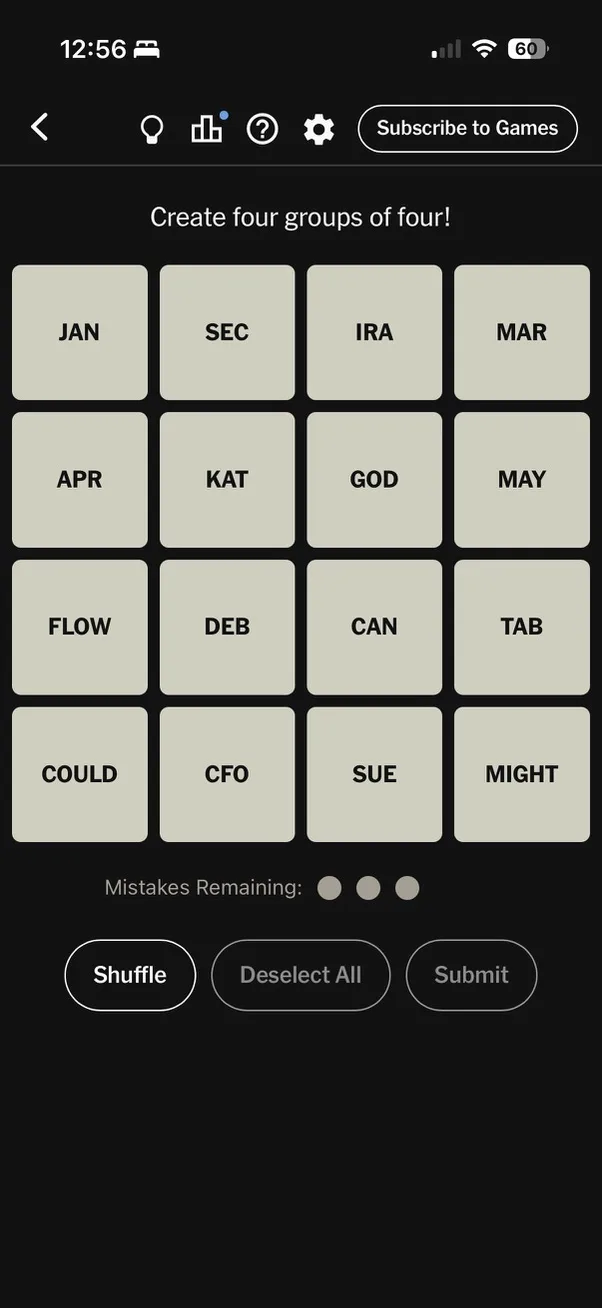
Take Wordle, for example, gives you six attempts to guess a five-letter word. That’s it. No tutorials. No onboarding screens. My 5-year-old nephew can figure it out, though whether a product should be that simple depends entirely on your target audience and complexity of value proposition.
Takeaway: Every click, form field, and second of load time is a conversion killer. Can users experience your core value in under 30 seconds?
Daily cadence creates urgency
One puzzle per day. That’s it. Come back tomorrow. This scarcity creates FOMO and anticipation which are powerful engagement drivers. I guess there’s an argument in here for the monetization team at NYT games: this same scarcity actually made me not want to pay for premium despite the juicy discounts. Personally, I look forward to each day’s puzzle instead of revisiting game archives. I’m curious to know if NYTimes’ monetisation team see this as a trend. Also, does limiting supply drive engagement but suppress premium conversions? The data would be fascinating.
Takeaway: Scarcity drives retention, but it might work against upsells. Test carefully.
Streaks: The ultimate retention mechanic
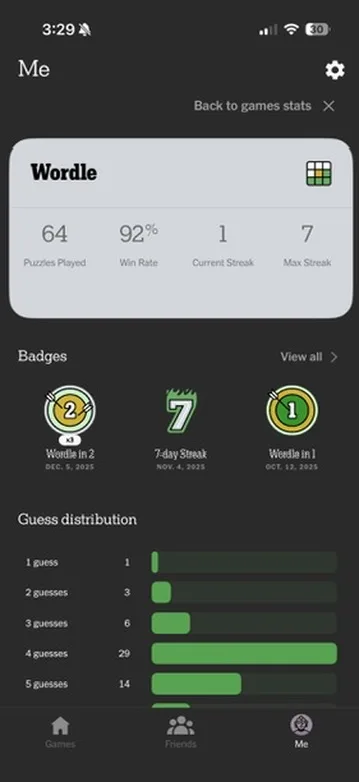
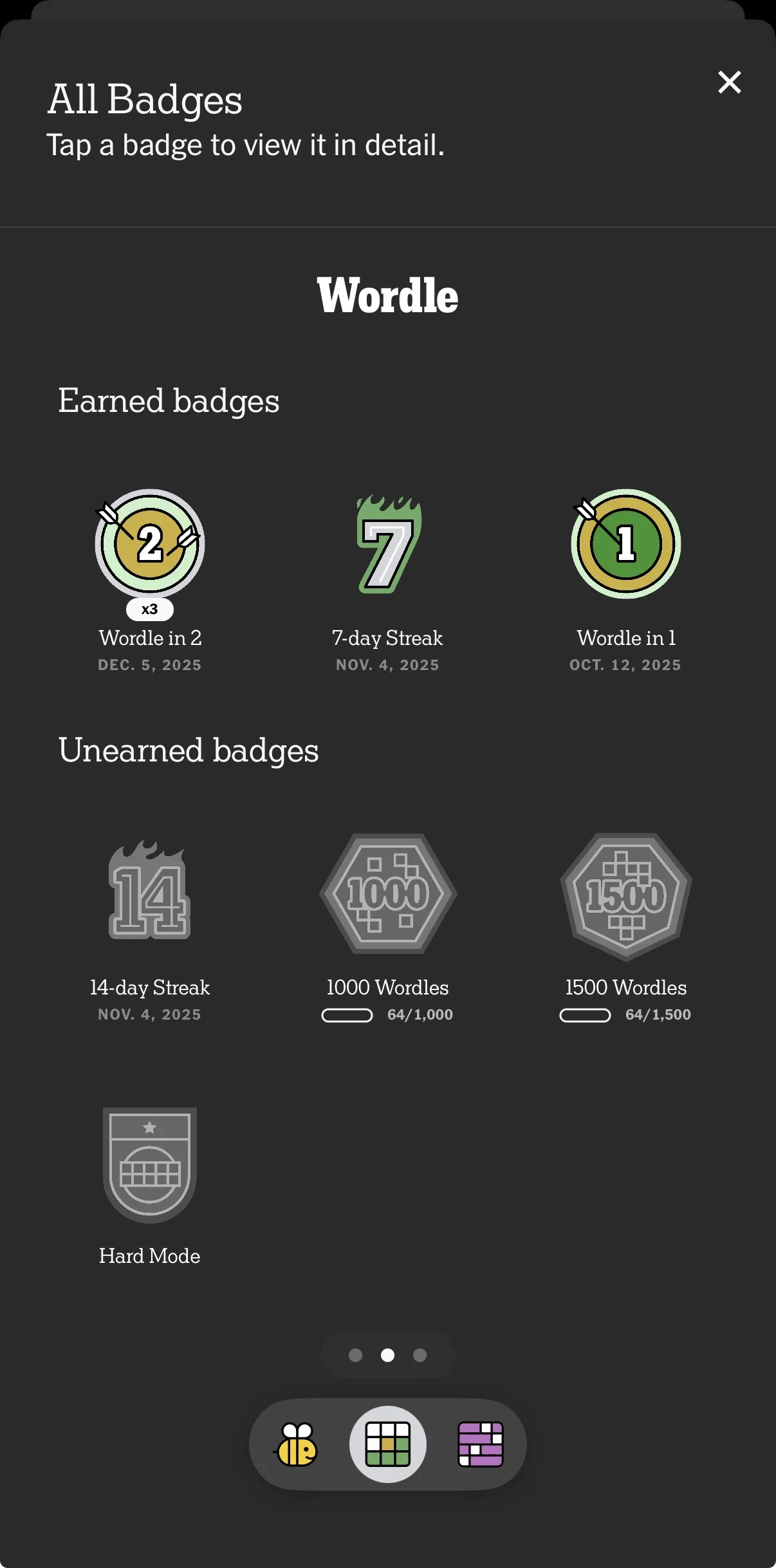
As at the time of this article, I had maintained 7 streaks in over 70 days.
Missing a day now would feel like throwing away months of effort. That’s the psychological power of the sunk cost fallacy working in The New York Times’ favor. Harry Lee, CEO of CitrusBits notes, “The ultimate payoff for implementing gamification is user engagement that is an order of magnitude higher than baseline”. Streaks tap into loss aversion, the psychological principle that humans fear loss more than they value equivalent gains. Breaking my streak isn’t just losing today’s puzzle; it’s losing over 70 days of consistency.
Takeaway: Progress visualisation and streak mechanics transform one-time users into committed daily actives. Whether it’s loyalty points, achievement badges, or progress bars show users what they stand to lose.
Social Currency Through Shareability
Every NYTimes Game ends with a shareable result: This isn’t just a score, it’s social proof. It’s bragging rights. It’s a conversation starter. Players share their gameplay experiences, strategies, and reactions across social platforms, amplifying the reach of the games and fostering a community. The genius? The share format is abstract. It doesn’t spoil the puzzle for others. It only shows performance, which creates curiosity and FOMO among non-players.
Takeaway: Build shareable moments into your product. Give users something worth showing off that simultaneously markets your product to their network. Think Spotify Wrapped, Duolingo streaks, Strava segments.
A Word on Advertising
Here’s where NYTimes Games loses me and where marketing teams miss a golden opportunity.
The Problem with Generic Ads
The ads I’ve encountered feel completely disconnected from the experience. Generic display ads that could be running anywhere, with no contextual tie to what I’m actually doing: solving puzzles, engaging my brain, enjoying a brief mental break. I recently saw an ad for a TV product. Standard ad copy. No creativity. No connection to the games or offer on the table
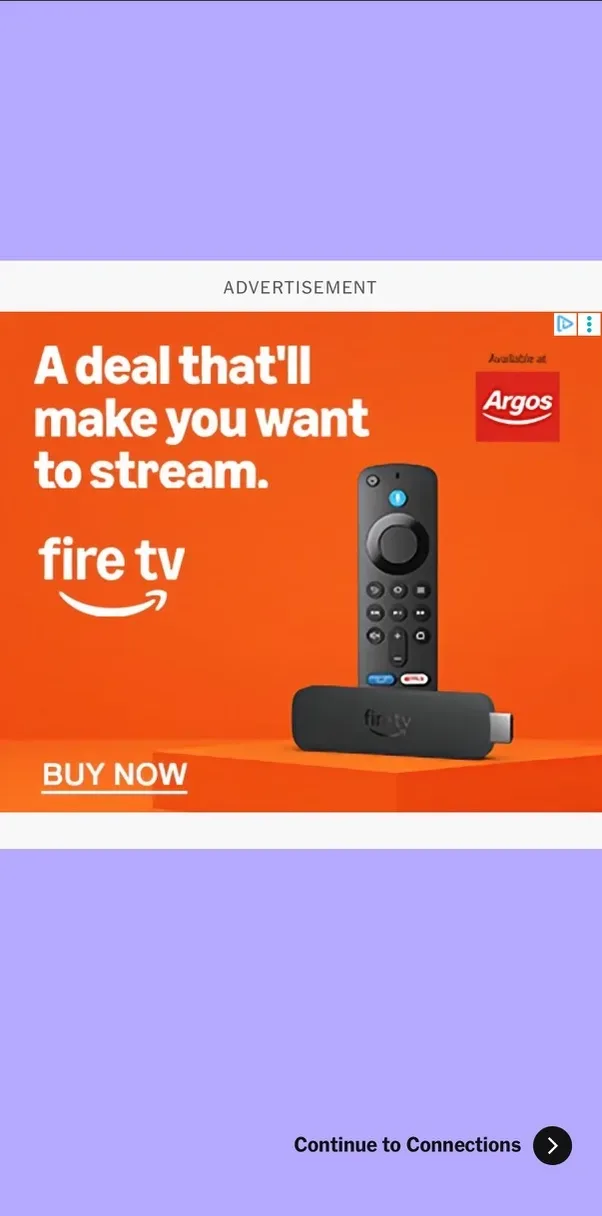

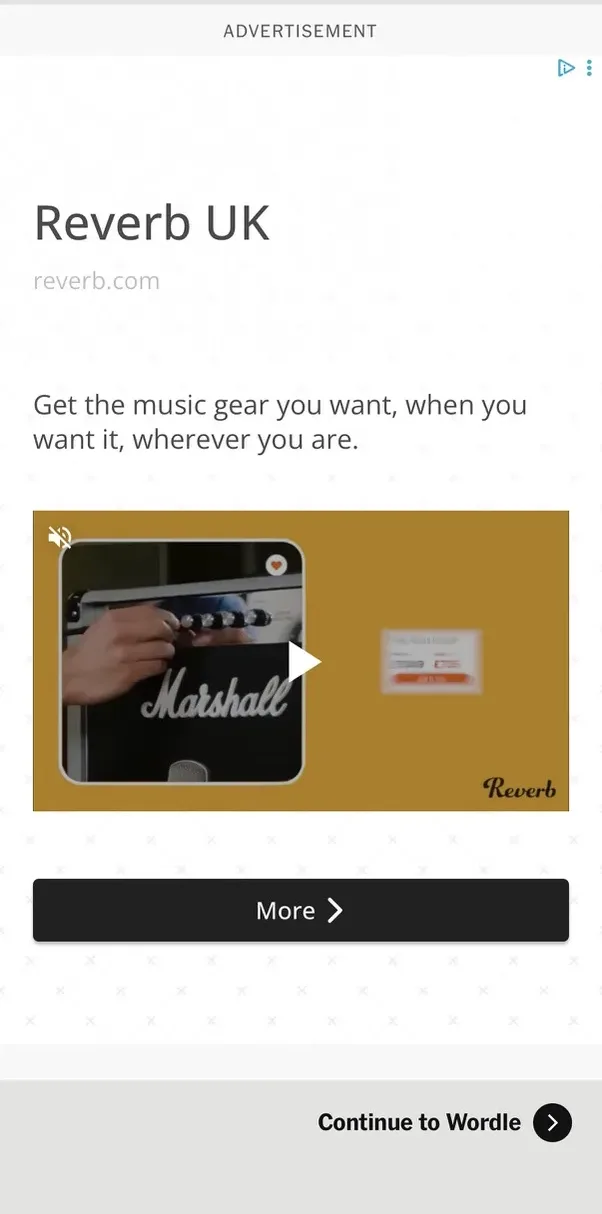
Here’s what they could have done:
Come for the games, shop the deals: Toshiba 65″ 4K, 30% off.
See what I did there? The ad copy acknowledges where I am, and creates relevance. That’s the difference between an ad I ignore and one I might actually click.
Takeaway: Lead with value, not Interruption. The best ads in a habit-forming app should:
Be contextual. Tie into the platform/experience
Offer clear value – Not just brand awareness, but actual deals/products worth leaving the app for
Feel native – Match the tone and intelligence of the platform
Wild idea for NYTimes (and other platforms): Build a native "Save Ad" feature. Let users bookmark interesting ads to revisit later, separate from the game experience. This gives advertisers extended visibility beyond the initial impression and shows NYTimes can prove ad engagement beyond click-through rates.
NYTimes Games Is a Masterclass
After over 70 days of daily play and months of analyzing the mechanics, here’s my conclusion: NYTimes Games isn’t just a product. It’s a case study in habit formation, behavioral psychology, and user-centered design.
Should NYTimes reconsider their ad revenue strategy? I believe so, if they want to keep the magic alive and drive more revenue. There are better, less intrusive ways to capture value from 8 billion annual plays.
Should your brand learn from NYTimes Games? Absolutely. Whether you’re building an app, an e-commerce site, or a content platform, the principles shared in this post apply.
Let’s be real. You probably don’t have the resources to build a Wordle competitor. The New York Times acquired Wordle for a seven-figure sum and has since expanded to nine puzzle games. That’s significant investment in engineering, design, editorial, and ongoing development.
But you don’t need to build the next Wordle. You need to understand why it works and apply those principles to your product. The future belongs to products that don’t just attract users but earn their daily return. Products that become rituals in a healthy way.
Now if you’ll excuse me, I have a Wordle streak to maintain.